Stan Kaplan BIO
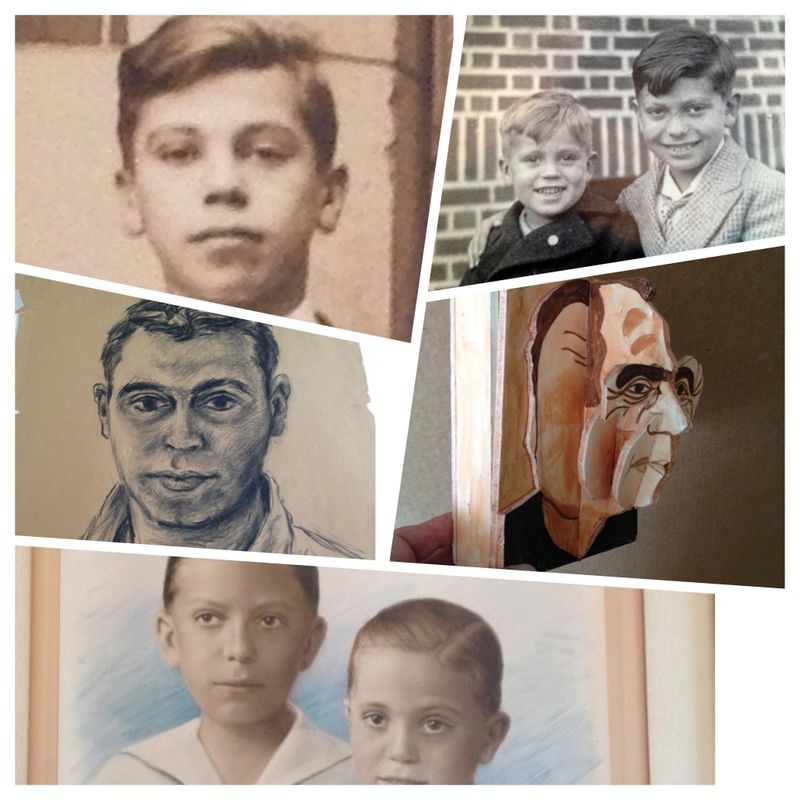
Stan Kaplan
Artist · Printmaker · Muralist · Book Artist
Stan Kaplan (1925–2015) was an American artist whose work bridged the expressive power of printmaking and wood-carved murals with the intimacy of the handmade book. Born in Brooklyn, New York, Kaplan spent more than six decades exploring woodcut, linocut, etching, and carved relief — creating a body of work rooted in human experience, memory, and the textures of everyday life.
Trained at The Cooper Union, New York University, and Pratt Institute, Kaplan brought both rigorous craft and deep personal vision to his work. His prints are marked by bold contrasts, expressive line, and a storytelling quality that draws the viewer into the lived world he observed — neighborhoods, families, social history, and the weight of time.
For thirty years, Kaplan taught printmaking, drawing, and design at Nassau Community College. He served as President of the Society of American Graphic Artists and founded Tortoise Press in 1979, through which he published limited-edition artist books that integrate image and text offering meaning through its sequence of words and images.
His work is held in the permanent collections of the Metropolitan Museum of Art, the Brooklyn Museum, the Philadelphia Museum of Art, the Library of Congress, and the New York Public Library, among many others. He exhibited widely across the United States and internationally — in Japan, Spain, and Taiwan — and received a Lifetime Achievement Award from the Society of American Graphic Artists in 2008.
Kaplan's artist books — from Particles of Light (1979) to Witness 9/11 (2003) — stand as a distinct achievement: works that are at once visual art, literature, and artifact. His writing on printmaking appeared in American Artist and Jewish Currents, and his work was reviewed in The New York Times, Art News, and Newsday.
He died in Tempe, Arizona, in April 2015, leaving behind a legacy that speaks to the enduring vitality of the printed image and the handmade mark.
Artist's Statement
...