The Doodle Project
It started with doodles in a high school notebook — Rob's. Stan saw them, recognized something worth pursuing, and built a project around the idea for his college art students. Years later Rob adapted it for his own students — dancers discovering what it means to get lost in play in an unfamiliar medium, then carrying that freedom back into their bodies. What began as marks on a page became a three-phase practice — and a creative conversation that passed between father and son across decades. And then the conversation found new forms.

Six of Stan's college students' Doodle Project examples.
First Instruction
Second Instruction
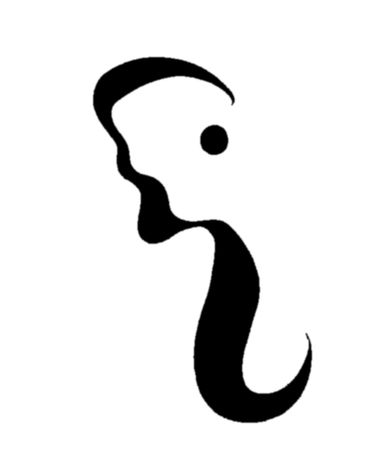
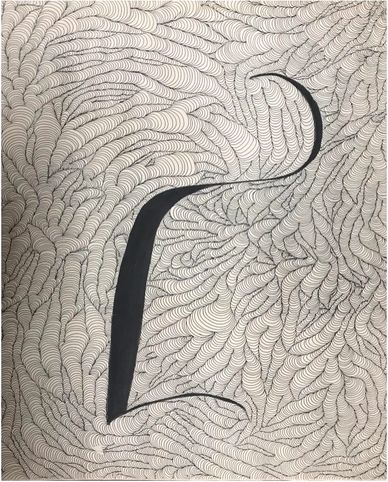
Create a line gesture as a foreground on the page. Taper the gesture so it is thinner and thicker. Then fill it in.
Second Instruction
Second Instruction
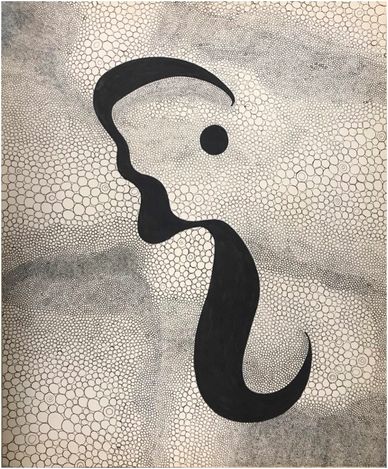
Using ONE doodle shape, fill in the whole page in and around the foreground shape.
Another Example

Another Example
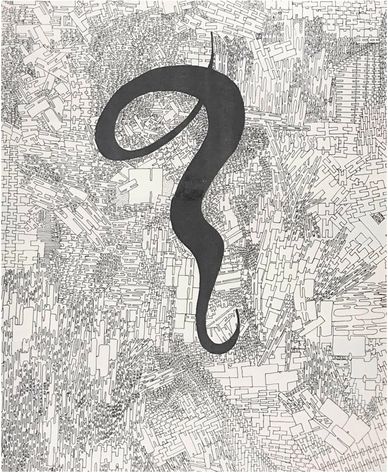
Another Example
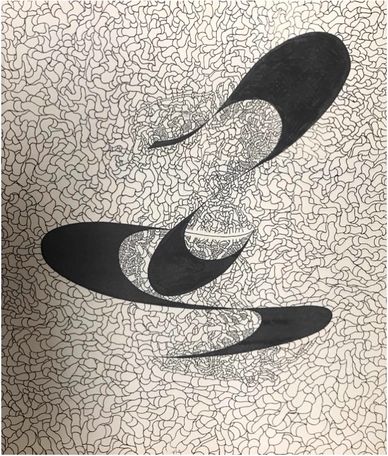
Another Example
Rob's 3-Phase Doodle Project
Dancers approaching choreography typically work to solve a specific problem — slowly, carefully, editing as they go. That process has its own value. But what it can crowd out is free-flowing experimentation and play. The Doodle Project creates a different kind of space — one where there is no problem to solve, no right answer, and no erasing. Just the conversation between you and what you're making.
The goal is to create without pre-thinking, without erasing mistakes — turning them into new directions. A conversation between you and your creation. Each phase builds on the last, developing improvisational and compositional skills in a solo medium. Together they embody the essence of the creative process.
Phase One (Option A)

Write your name in cursive across the whole page — or choose another word with personal meaning. One word, written large, across the entire page. Then begin changing and enhancing the shape: double the lines, make them taper in or flare out, color them, create areas of positive and negative space. Let the letters become something more than letters.
Next, choose a single doodle shape and let it unfold as a background — behind and around the foreground, throughout the whole page. Most people don't stick to one doodle shape, and that's fine. That's the conversation taking over.
Phase One (Option B)
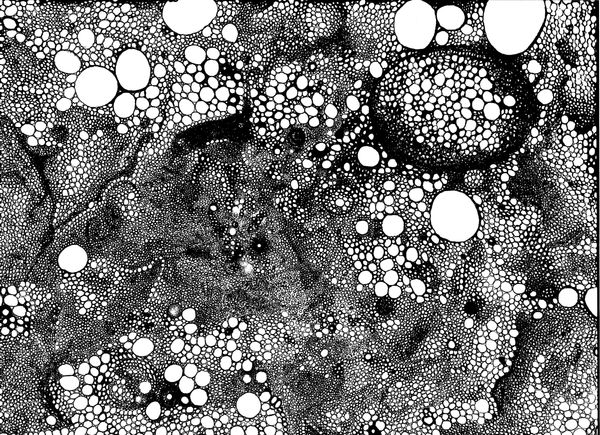
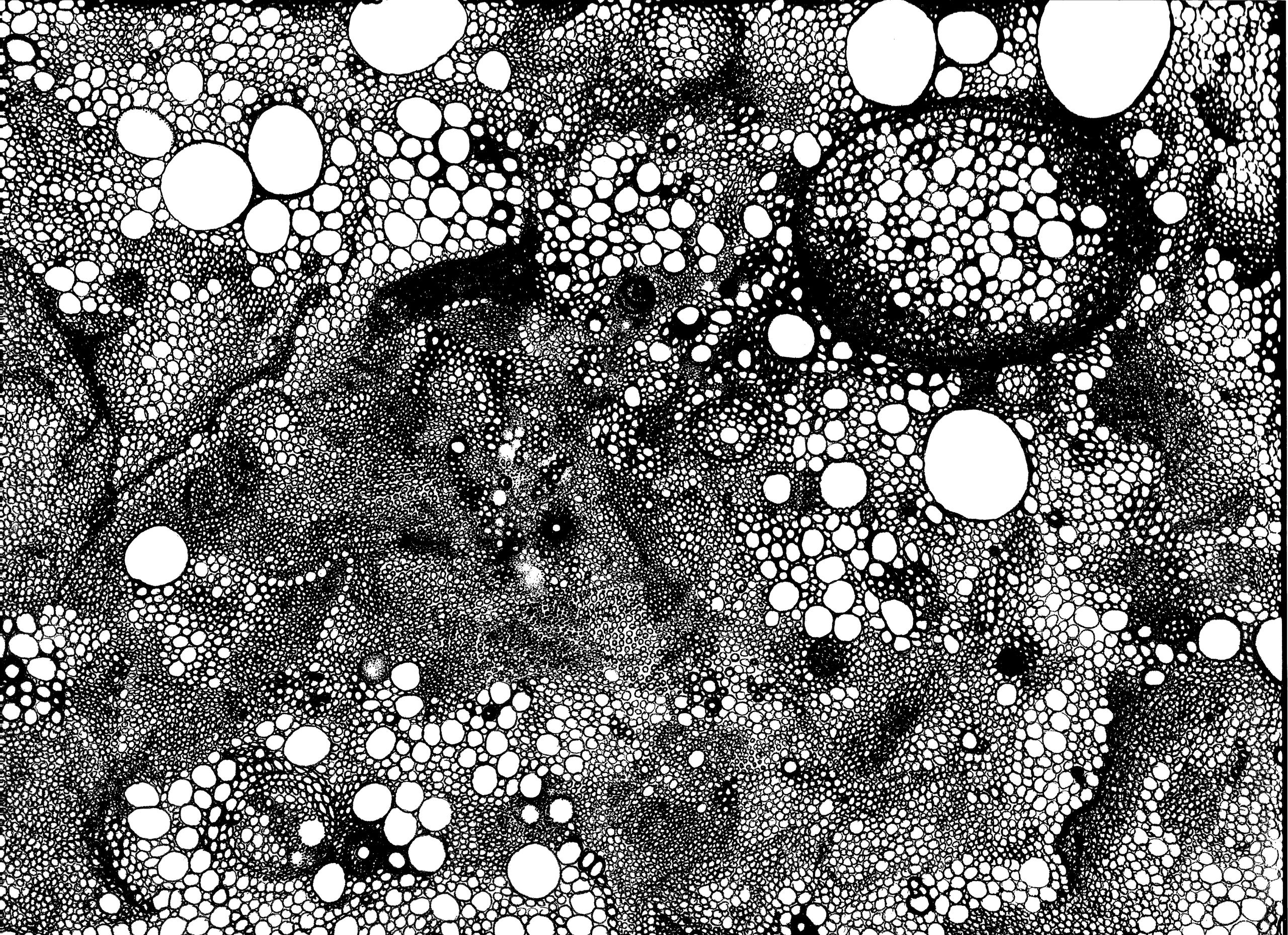
Pick up a pen. Start drawing. No plan, no judgment, no erasing. Let the line go where it wants and follow where it leads. Mistakes become new directions. A design conversation between you and the page.
Phase Two — Collage or Sculptural Variation

Take what you made and what you learned from making it. Your starting point is both the object from Phase One and the experience of creating it — the flow you found, or the thinking that got in the way.
Collect materials, let things incubate, and wait for the ah-ha moment. Then begin. Some possibilities: scan and enlarge images from Phase One to use as ingredients in a collage, add other materials, or take it in a sculptural direction entirely. Let Phase One speak to you and respond.
Phase Three — Into the Body

After two phases in unfamiliar territory — pen, paper, collage, sculpture — the work returns home. Phase Three is a performative variation on everything that came before: the objects you made and the experience of making them.
Look back at your whole process. Sense what the different stages look like and feel like in your body — texture, rhythm, shape, sensation. This is not a verbal process. It's intuitive and sensory. Let your body respond.
Then move. Experiment. Pull from your earlier processes and allow yourself to go to new places. Video yourself — some of what emerges will be subtle, and you'll want to be able to look back.
This is not about creating a finished dance. It's about discovering new ways of generating movement — following the same impulse that started with a pen and a blank page.